Maintaining a clean environment is one of the most important parts of controlling contamination in cleanrooms and other critical environments. If you are a cleanroom manager, or if you work in another contamination-sensitive environment, you already understand the importance of following established cleaning and disinfecting protocols.
In some environments, routine cleaning and disinfection may be supplemented with hydrogen peroxide fogging. Fogging can help treat exposed surfaces throughout a space, including areas that may be difficult to reach through manual cleaning alone.
If you’re not sure how fogging works, don’t worry. We’ve put together this brief guide to explain the basics and help you understand when it may be appropriate.
Why Is Fogging Important?
Traditional cleaning and disinfecting routines focus on accessible surfaces, including high-touch areas such as tabletops, light switches, door handles, equipment surfaces, and other frequently contacted areas.
However, manual cleaning may not always reach every exposed surface in a complex environment.
Hydrogen peroxide fogging can supplement routine cleaning by dispersing an EPA-registered disinfectant throughout a prepared treatment area. Depending on the product, equipment, and application method, this can provide broader treatment of exposed surfaces, including areas that are more difficult to reach manually.
Fogging should not be considered a replacement for normal cleaning. Dust, dirt, residues, oils, and other physical contamination still need to be removed through appropriate cleaning procedures.
How Does Fogging Work?
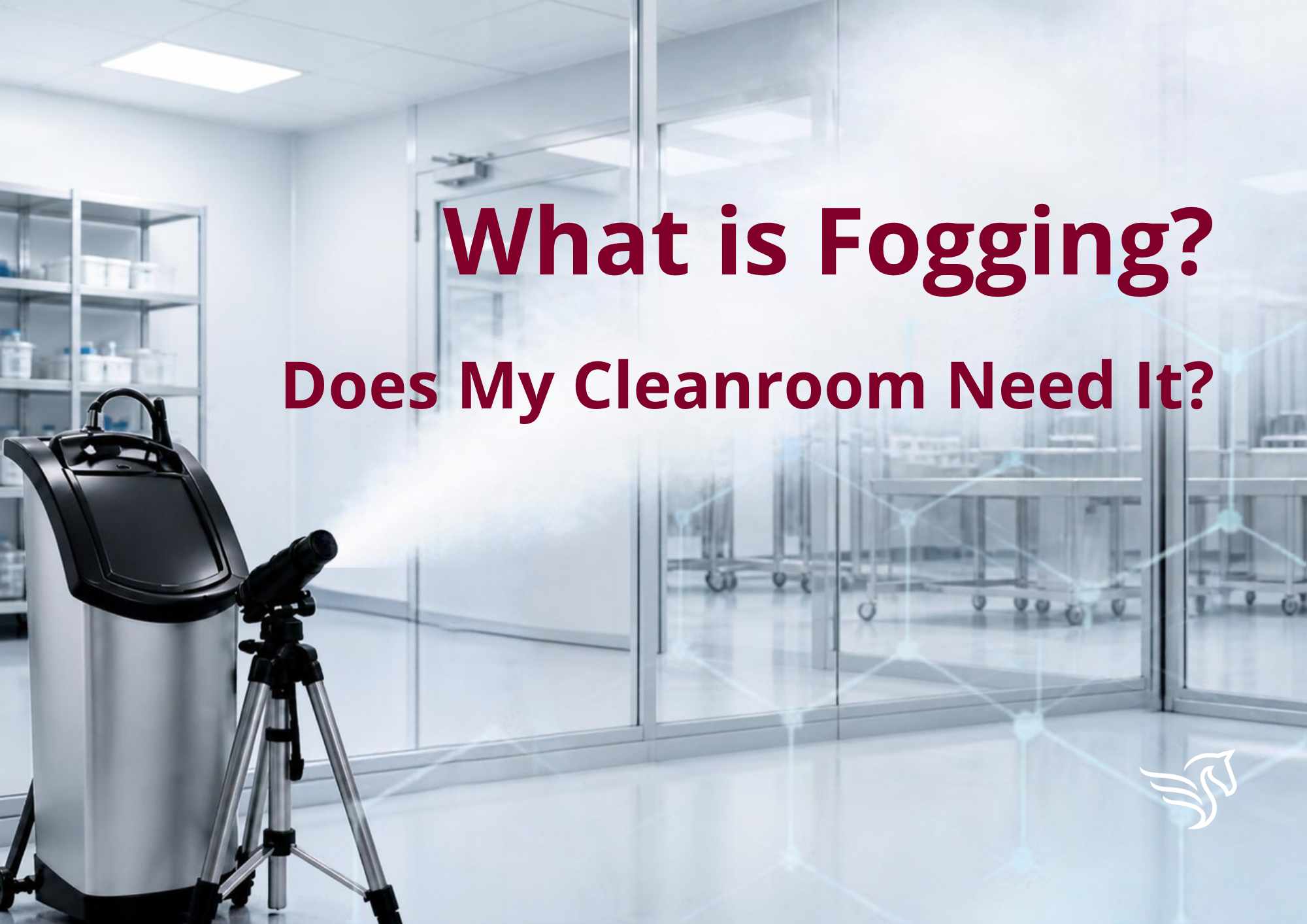
As the name implies, disinfectant fogging works by dispersing a disinfectant, such as hydrogen peroxide, into fine droplets throughout a designated treatment area.
Specialized equipment distributes the hydrogen peroxide-based solution throughout the prepared space so that it can contact exposed surfaces.
The effectiveness of the treatment depends on factors such as the disinfectant being used, concentration, application method, contact time, room conditions, and the microorganisms being targeted.
It is also important to use disinfectants only according to their approved label directions. The EPA notes that when a disinfectant is applied by fogging or misting, that application method should be included in the product’s label directions.
What Is Vapor Fogging?
Hydrogen peroxide can also be applied using vapor-based systems.
Vaporized hydrogen peroxide, commonly referred to as VHP, uses specialized equipment to convert hydrogen peroxide into a vapor that is distributed throughout a prepared treatment area.
VHP and aerosolized or fogged hydrogen peroxide are related decontamination approaches, but they are not exactly the same process. They can use different equipment, concentrations, environmental conditions, treatment cycles, and protocols.
The CDC recognizes vaporized hydrogen peroxide as a technology used for decontamination of large and small areas and notes that vapor-phase hydrogen peroxide has demonstrated significant sporicidal activity under appropriate conditions.
Facilities considering hydrogen peroxide treatment should therefore evaluate the specific system and process being proposed rather than assuming all hydrogen peroxide applications work the same way.
For a closer look at the different approaches Pegasus uses, see 3 Types of Hydrogen Peroxide Fogging and the Differences Between Them.
What Is Dry Mist Fogging?
Dry mist fogging, sometimes referred to as dry fogging or aerosolized hydrogen peroxide treatment, uses specialized equipment to disperse very fine droplets of disinfectant throughout a prepared space.
Because the droplets are small, they can move throughout the treatment area and reach exposed surfaces that may be difficult to address through manual wiping alone.
The exact concentration, droplet size, treatment time, aeration requirements, and approved uses depend on the specific product and equipment being used.
This is why it is important to follow the manufacturer’s treatment protocol and the disinfectant’s EPA-approved label.
It can provide broad treatment of exposed surfaces and may be particularly useful when contamination concerns extend beyond surfaces that can easily be cleaned by hand.
However, fogging does not replace routine cleaning, and not every cleanroom or critical environment requires it. The appropriate approach depends on the facility, contamination risk, operational requirements, and established procedures.
Learn more about how Pegasus provides hydrogen peroxide fogging services for cleanrooms, laboratories, life sciences facilities, and other contamination-sensitive environments.
Frequently Asked Questions on Hydrogen Peroxide Fogging
What is hydrogen peroxide fogging?
Hydrogen peroxide fogging is a decontamination process that uses specialized equipment to disperse an H2O2-based disinfectant throughout a prepared treatment area. It is generally used to supplement routine cleaning and disinfection when broader treatment of exposed surfaces is needed.
Does fogging replace regular cleaning?
No. Fogging does not physically remove dust, dirt, oils, residues, or other soils. Manual cleaning remains an important part of maintaining cleanrooms and other controlled environments.
Is fogging the same as vaporized hydrogen peroxide?
Not exactly. Fogging generally disperses fine droplets of a hydrogen peroxide solution, while vaporized hydrogen peroxide systems distribute hydrogen peroxide in vapor form. The equipment, application conditions, and treatment protocols can differ.
Can hydrogen peroxide fogging kill bacteria, viruses, and fungi?
Hydrogen peroxide is an active ingredient in antimicrobial products used against a variety of microorganisms. However, effectiveness depends on the specific product, organism, concentration, application method, and required contact time. Facilities should follow the product label and treatment protocol for the specific application.
Does every cleanroom need hydrogen peroxide fogging?
No. Whether fogging is appropriate depends on the facility’s contamination risks, environmental monitoring results, operating procedures, and decontamination requirements.
When might a facility consider hydrogen peroxide fogging?
Hydrogen peroxide treatment may be considered following a contamination event, during a planned shutdown or restart, after certain environmental monitoring concerns, or when an established contamination-control procedure calls for broader treatment of the space.