Industrial cleaning is a broad term for cleaning services in specialized facilities such as factories, warehouses, medical facilities, data centers, cleanrooms, and other environments that require specialized cleaning.
Often, industrial cleaning uses specialized products, equipment, or procedures to meet the requirements of the facility or industry. Industrial cleaning may also account for waste handling and disposal in situations where debris or materials must be carefully managed.
Industrial cleaning is important for a variety of reasons. Most importantly, it can help reduce accidents and injuries by removing hazardous materials, dust, and debris from the work environment. Second, industrial cleaning accounts for vital and expensive equipment in a facility, taking care to follow best practices for its care and longevity.
Finally, industrial cleaning can play an important role in helping facilities meet applicable safety, environmental, and operational requirements. The specific regulations and standards that apply depend on the industry, facility, location, and work being performed.
What Environments Need Industrial Cleaning?
Here are some of the more common places that need industrial cleaning:
Manufacturing Facilities
Manufacturing facilities often generate large amounts of dust, dirt, residue, and debris from the production process. Industrial cleaning services can help keep the facility clean, minimize contamination and safety concerns, and support the overall operation of the facility.
Different manufacturing environments may also be subject to industry-specific environmental requirements. The EPA maintains regulatory information for manufacturing sectors including aerospace, chemical manufacturing, computer and electronic products, pharmaceuticals, food processing, metals, plastics, and others.
Warehouses
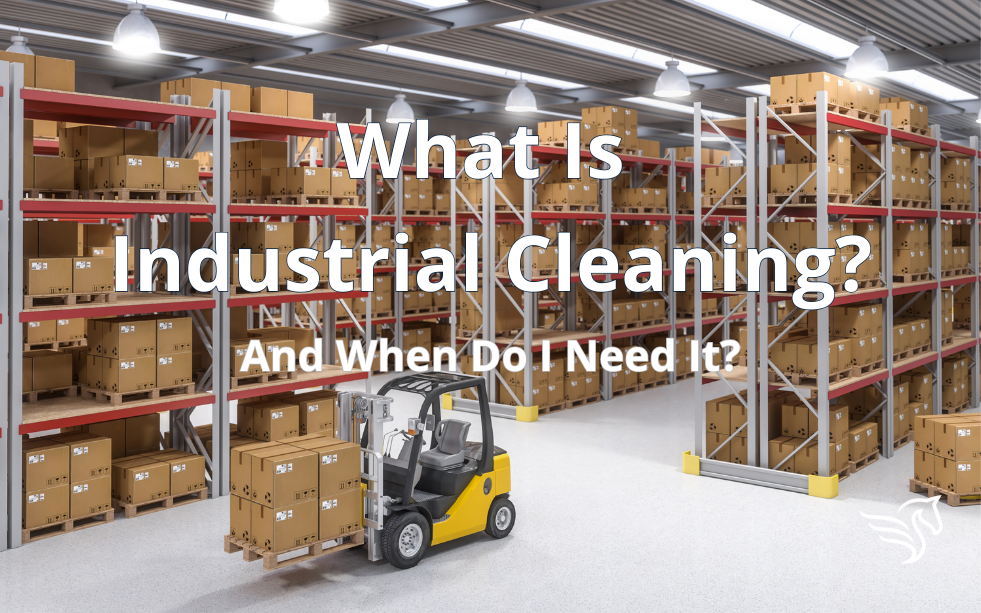
Warehouses are often large facilities with high ceilings and hard-to-reach areas. Regularly scheduled industrial cleaning can help prevent the accumulation of dirt and debris while maintaining cleaner floors, loading areas, high surfaces, storage areas, and employee spaces.
Industrial cleaning can be particularly important in high-traffic warehouse and distribution environments where equipment, products, employees, and vehicles are constantly moving through the facility.
Hospitals and Medical Facilities
Hospitals and medical facilities require a high level of cleanliness to support infection prevention and protect patients, employees, and visitors.
Cleaning requirements can vary significantly depending on the area of the facility. CDC infection-control guidance calls for routine and targeted environmental cleaning based on factors such as patient contact, the degree of soiling, and the surfaces being cleaned. Frequently touched surfaces and areas close to patients generally require more frequent cleaning and disinfection.
Data Centers
Data centers house critical IT infrastructure that requires a clean and controlled environment to help protect equipment and maintain reliable operations.
Dust and particulate can be a major concern in these facilities, especially around sensitive equipment, raised floors, cooling systems, and other infrastructure. Specialized data center cleaning services can address subfloors, equipment surfaces, overhead areas, ESD-sensitive floors, and other areas that require cleaning procedures designed around mission-critical environments.
Power Plants
Power plants generate large amounts of heat and contain numerous systems that must be carefully maintained. Mechanical areas, equipment spaces, production areas, and other parts of these facilities may require specialized cleaning procedures and equipment.
Electric power generation is also among the industries covered by EPA’s sector-specific regulatory resources.
When Do I Need to Employ Industrial Cleaning Services?
There are a few scenarios where specialized industrial cleaners may be necessary to help address safety, regulatory, operational, or facility requirements.
When It’s Required by the EPA
The Environmental Protection Agency (EPA) regulates environmental issues affecting businesses across a wide range of industries.
The requirements that apply to an individual facility depend on factors such as its industry, activities, materials, emissions, waste streams, and location. The EPA provides regulatory information organized by business sector covering industries such as manufacturing, construction, electric utilities, oil and gas, transportation and warehousing, and others.
Facilities should determine which federal, state, and local environmental regulations apply to their specific operations rather than assuming the same requirements apply to every industrial environment.
When It’s Required by OSHA
The Occupational Safety and Health Administration (OSHA) establishes and enforces workplace safety and health standards.
Industrial environments can have more complex hazards than a standard office environment, including machinery, chemicals, electrical systems, elevated work areas, moving equipment, and other conditions.
OSHA also offers a no-cost and confidential On-Site Consultation Program primarily for small and midsize businesses. Consultants from state agencies or universities can help employers identify and address workplace hazards and improve their safety and health programs. The consultation program is separate from OSHA enforcement.
To Maintain Expensive Equipment
We probably don’t need to tell you that your equipment represents a significant investment in your business.
Equipment that isn’t properly maintained can have a shorter useful life or experience problems that disrupt operations. Replacing equipment isn’t just expensive. Depending on the facility, an equipment failure could also interrupt production or other critical operations.
A properly designed industrial cleaning program can work alongside preventive maintenance by controlling dust, dirt, residue, and other contaminants around sensitive equipment and work areas.
In Emergency Situations
Even office and commercial environments may need specialized cleaners in unusual situations.
Spills, leaks, water intrusion, contamination events, construction activity, and other incidents may require equipment, training, or procedures that a regular janitorial team does not have.
The proper response depends on the type of incident and the materials involved. Hazardous materials, biological contamination, chemicals, or significant water damage may require specialized remediation or other qualified professionals rather than a routine cleaning provider.
What Are Types of Industrial Cleaning Services?
Industrial cleaning is a broad term. Nearly every industry will have its own needs, but here are some common types of industrial cleaning:
Deep Cleaning Services
Deep cleaning refers to cleaning parts of a facility or equipment that aren’t normally observed or accessed every day.
This could involve accessing high surfaces, overhead areas, equipment exteriors, mechanical spaces, production areas, or other difficult-to-reach locations.
Parts of your facility that are “out of sight, out of mind” can accumulate dust, debris, and other contaminants over time, which is why periodic deep cleaning can be an important addition to routine facility cleaning.
Cleanroom Cleaning
Cleanrooms are used for a wide range of applications, including manufacturing pharmaceuticals and medical devices, assembling electronics and semiconductor components, biotechnology, scientific research, and other applications where contamination must be carefully controlled.
Cleanroom cleaning requires specialized procedures designed around controlled environments, including cleaning methods, tools, materials, gowning requirements, documentation, and other protocols established for the facility.
Tank Cleaning
Tanks are used to store a variety of materials, including chemicals, oils, liquids, and process materials.
Over time, these materials can leave behind residue and buildup that may need to be removed. Tank cleaning can involve different cleaning methods depending on the type of tank, material being removed, facility requirements, and level of cleaning required.
Some tank-cleaning work can also involve confined spaces or hazardous materials and should only be performed by appropriately trained and qualified personnel.
Storm Drain Cleaning
Industrial facilities may need to maintain storm drains and stormwater systems to control accumulated sediment, debris, standing water, and pollutants.
Environmental requirements can vary considerably based on the facility, industry, jurisdiction, and types of pollutants involved. Facilities should determine which stormwater and environmental regulations apply to their operation before developing a maintenance or cleaning program.
Mold Remediation
Mold can become a serious facility problem when moisture is not addressed.
Mold often develops in areas affected by leaks, condensation, high humidity, or other moisture problems, including locations that may not be immediately visible.
According to the EPA, moisture control is the key to mold control. Mold remediation should begin by identifying and correcting the source of the moisture. The size of the affected area, type of materials involved, potential for hidden mold, and possible exposure to building occupants should all be considered when planning remediation.
Significant or complex mold conditions may require an experienced mold remediation professional rather than a general cleaning service.
Is Industrial Cleaning Expensive?
Expect to pay more for industrial cleaning than general janitorial services.
Workers may require additional training and specialized equipment, cleaning products, personal protective equipment, access equipment, or facility-specific procedures.
That being said, the cost of cutting corners can be far greater. Poor cleaning practices can contribute to safety concerns, contamination, equipment problems, operational disruption, and other avoidable costs.
The actual cost of industrial cleaning depends on factors such as the size of the facility, scope of work, type of environment, service frequency, access requirements, equipment needed, and level of specialization involved.
The Benefits of Working With Pegasus for Your Industrial Cleaning
Industrial cleaning isn’t a one-size-fits-all service.
At Pegasus, we provide customized cleaning and facility support programs for specialized environments ranging from manufacturing and distribution facilities to data centers, healthcare environments, laboratories, cleanrooms, biotechnology facilities, semiconductor facilities, and other critical spaces.
Here are just a few reasons to partner with Pegasus for your industrial cleaning needs:
Experience: We have experience providing cleaning services across a wide range of specialized facilities and industries. Different environments present different operational, safety, contamination-control, and service requirements, so understanding the facility is an important part of developing the right cleaning program.
Customized Cleaning Programs: Every facility has different needs. Cleaning frequencies, scopes, equipment, procedures, staffing, and documentation can be tailored around the specific environment rather than relying on the same cleaning program for every customer.
Proactive Approach: We take a proactive approach to cleaning and facility support. Regular cleaning and structured processes can help facilities address dust, debris, contamination, and other issues before they become more significant operational concerns.
Structured Processes and Quality Control: Pegasus uses structured cleaning systems, trained teams, supervision, and quality-control processes designed to create greater consistency and accountability across facility cleaning programs.
Pegasus provides a broad range of commercial cleaning, specialty cleaning, and facility maintenance services for organizations with both everyday and highly specialized facility requirements.
Contact Pegasus Today for Industrial Cleaning Services
At Pegasus, our teams have experience working across multiple industries and facility types, including environments that require specialized equipment, procedures, training, and contamination-control practices.
Whether you need ongoing facility cleaning, periodic deep cleaning, or specialized support for a critical environment, the right program starts with understanding your facility and its operational requirements.
Contact Pegasus today to discuss your industrial cleaning needs and build a cleaning program designed around your facility.
Frequently Asked Questions About Industrial Cleaning
What is industrial cleaning?
Industrial cleaning refers to specialized cleaning services for manufacturing plants, warehouses, data centers, cleanrooms, laboratories, healthcare facilities, and other environments with cleaning needs beyond conventional office or commercial janitorial service.
What is the difference between industrial cleaning and janitorial cleaning?
Janitorial cleaning typically focuses on routine tasks such as floors, restrooms, common areas, offices, trash removal, and general facility cleanliness.
Industrial cleaning may involve production areas, sensitive equipment, controlled environments, high surfaces, specialized contaminants, or areas requiring additional equipment, training, procedures, or safety precautions.
What industries need industrial cleaning?
Industrial cleaning is used across manufacturing, warehousing and distribution, healthcare, biotechnology, pharmaceuticals, semiconductor manufacturing, technology, data centers, aerospace, utilities, and other specialized industries.
How often should an industrial facility be cleaned?
The appropriate cleaning frequency depends on the facility, production processes, traffic, contaminants, equipment, regulatory requirements, and internal standards.
Some areas may require cleaning every day, while deep cleaning or specialized services may be scheduled weekly, monthly, quarterly, annually, or around maintenance shutdowns and other operational events.
Does industrial cleaning require specialized equipment?
It can. Industrial cleaning may require specialized vacuums, floor equipment, lifts, HEPA filtration, ESD-safe equipment, personal protective equipment, contamination-control materials, or other tools depending on the facility and scope of work.
How do I know if I need an industrial cleaning company?
If your facility includes production equipment, controlled environments, sensitive electronics, regulated processes, high or difficult-to-access areas, specialized contaminants, or cleaning requirements your normal janitorial team is not equipped to handle, a specialized industrial cleaning provider may be appropriate.