Establishing and maintaining a cleanroom is a complex but necessary part of meeting industry regulations across fields where contamination control determines product quality, research integrity, and operational reliability.
As industries from aerospace to biotech to data infrastructure push toward tighter tolerances, the discipline behind cleanroom classification, and the cleaning programs that sustain it, has only grown more important.
What Is a Cleanroom?
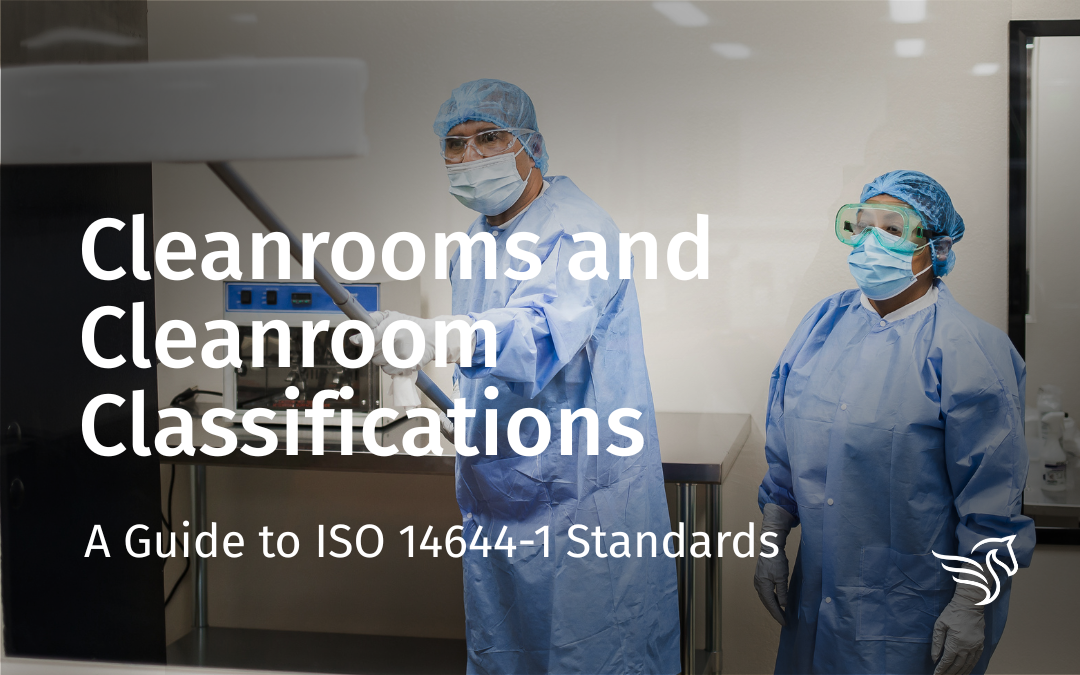
A cleanroom is a highly controlled, self-enclosed environment kept free from contamination by pollutants such as dust, airborne microbes, aerosol particles, and chemical vapors.
Cleanrooms are most commonly found in manufacturing and scientific research facilities. However, any process that can be negatively affected by small particles can benefit from a cleanroom. The defining characteristic is not appearance but measured, maintained air cleanliness held within a specified range.
What Is a Cleanroom Classification?
Cleanrooms are classified by the International Organization for Standardization (ISO) according to the maximum concentration of airborne particles allowed in the space. An ISO Class 1 cleanroom is the cleanest and most heavily filtered, while an ISO Class 9 cleanroom is the least filtered. The current version of the standard, ISO 14644-1:2015, defines nine cleanroom classes, ISO 1 through ISO 9, each with strict limits on particle counts per cubic meter of air.
ISO Class 1 cleanrooms are so free from contaminants that these spaces are appropriate for working with highly sensitive materials in fields such as nanotechnology and aerospace. At the other end of the spectrum, an ISO Class 9 cleanroom is roughly as clean as ordinary outdoor air.
The standard applies to any industry where airborne contamination control is critical, from semiconductor fabs to vaccine production suites. Classification considers only particles within a defined size range: ISO 14644-1:2015 uses particle populations with threshold sizes from 0.1 microns to 5 microns for classification purposes.
What Changed in the 2015 Revision
If you are working from older cleanroom documentation, it is worth understanding what changed when the standard was last substantially revised. ISO 14644-1:2015 replaced the 1999 edition, and ISO 14644-2:2015 replaced the 2000 edition, with both published in December 2015. The 2015 version was reviewed and confirmed in 2021, so it remains the current standard.
The most consequential update affects how cleanrooms are tested and certified. The 2015 revision adopted a more consistent statistical approach to the selection and number of sampling locations and the evaluation of the data collected. The number of sampling points is no longer calculated using the square root of the surface area formula. It is now taken from a defined table in the standard.
By increasing statistical accuracy through a larger number of sampling locations, the revision also eliminated the upper confidence limit calculation that was previously required for cleanrooms with between two and nine sampling locations.
There is also an important change for anyone classifying the most stringent environments. The limit for particles 5.0 microns and larger at ISO Class 5 was removed in the 2015 revision for classification purposes, though it remains relevant for monitoring.
Under the current standard, any particle with an equivalent diameter of 5.0 microns or greater is described as a macroparticle. Where a regulatory agency requires consideration of these particles, they are expressed using an M descriptor rather than as a classification attribute.
The takeaway for facility leaders is straightforward: classification is not a one-time event. It depends on a defined sampling methodology, repeatable execution, and documentation that holds up under audit.
That is as much about the cleaning and maintenance program as it is about the room itself.
What Your Cleanroom Classification Means for You
Establishing an ISO cleanroom classification helps you meet the requirements for processing or manufacturing certain materials. Many laboratories, for example, must meet a minimum ISO classification to ensure processes and experiments are performed under consistent environmental conditions.
Maintaining that classification is the harder part. Each time someone enters the room, or even opens the door, air quality is affected. For this reason, the organization that owns the cleanroom must establish a set of best practices for proper use.
These rules govern a range of considerations, including the protective garments people wear when entering the cleanroom, hand cleaning and gloving processes, filtration management, and cleaning procedures.
Cleanroom Cleaning Is a Specialized Discipline
Organizations can often set up sufficient procedures for gowning and access control on their own. Maintaining the cleanliness of the space, however, is usually outside the capability of typical cleaning crews.
Cleanroom cleaning must be performed in a precise, repeatable way, with specialized equipment, by technicians trained specifically for this work.
The consequences of failing to maintain your ISO requirements can include costly findings, corrective actions, and, eventually, loss of your classification.
In a controlled environment, the difference between a compliant cleanroom and a noncompliant one is rarely effort. It is consistency, and consistency comes from systems rather than individual habit.
This is where structured execution matters. At Pegasus, cleanroom cleaning programs run on the OS1&trade Cleaning Operating System, which standardizes workflows so that execution does not drift between shifts, technicians, or buildings, and the PegAssure quality assurance platform, which verifies that work was completed as intended through inspection and reporting.
The result is a cleaning program that produces documented, repeatable outcomes rather than variable ones.
Industries That Depend on Cleanroom and Critical Environment Cleaning
Cleanroom classification is not confined to a single sector. The same contamination control principles, applied at different thresholds, support several industries that Pegasus serves.
Aerospace and Advanced Manufacturing
Aerospace production demands precision, and contamination is a direct threat to it. Dust, debris, and particulate buildup can compromise sensitive components, affect production quality, and create compliance exposure in regulated environments.
Pegasus delivers aerospace cleaning programs structured to reduce particulate across manufacturing facilities, assembly lines, MRO operations, engineering labs, testing environments, cleanrooms, and high-bay spaces, using controlled methods designed to protect components without disrupting critical workflows.
Data Centers and AI Facilities
Data centers and AI infrastructure operate at higher compute densities and thermal loads than ever before, and even small amounts of particulate can restrict airflow, reduce cooling efficiency, and increase the risk of thermal events. While not every data hall is a formally classified cleanroom, the contamination control mindset is the same.
Pegasus supports data center environments with specialized data center cleaning services such as ESD-safe floor care, raised floor and subfloor cleaning, overhead and cable tray cleaning, and low-impact methods designed to protect uptime. You can read more in our post on how cleaning helps prevent data loss in data centers and AI facilities.
Biotech, Life Sciences, and GMP Facilities
In controlled manufacturing and laboratory spaces, cleaning is directly tied to compliance and product quality. When execution varies between shifts or buildings, documentation gaps can surface during internal or regulatory audits.
Pegasus delivers structured cleaning for biotech, life sciences, and GMP facilities, including cleanroom services, critical environment cleaning, and targeted disinfection such as hydrogen peroxide fogging, all built around contamination control, documentation, and consistent execution. Audit readiness is not built during an inspection. It is built through daily discipline.
These industries sit alongside the broader range of environments Pegasus supports through its Industries We Serve programs, from healthcare and government facilities to commercial real estate and education.
Stay Compliant With a Structured Cleanroom Program
Avoid compliance findings and protect your classification by establishing a thorough, standardized cleaning process. Pegasus has drawn on decades of experience in critical environment cleaning to build programs that are systematic, repeatable, and consistent across every shift and location.
If your facility operates a cleanroom or any controlled environment where contamination control matters, Pegasus can help you evaluate your current program and identify where structure can reduce risk.
Contact Pegasus to schedule a facility evaluation and receive a customized Facility Blueprint designed to support your operational and compliance goals.
Frequently Asked Questions About Cleanrooms and Cleanroom Classifications
What is a cleanroom?
A cleanroom is a controlled, enclosed environment engineered to maintain a low level of airborne contaminants such as dust, microbes, aerosol particles, and chemical vapors. It is defined by measured and maintained air cleanliness held within a specified range rather than by appearance.
What is the current cleanroom classification standard?
Cleanrooms are classified under ISO 14644-1:2015, which defines nine classes from ISO 1 (cleanest) to ISO 9 (least filtered) based on the concentration of airborne particles per cubic meter. This version replaced the 1999 edition and remains the current standard following its most recent review.
What particle sizes are used for cleanroom classification?
ISO 14644-1:2015 classifies air cleanliness using particles with threshold sizes ranging from 0.1 microns to 5 microns. Particles 5.0 microns and larger are treated as macroparticles and are handled separately from formal classification, though they can still be measured during monitoring.
What changed in the 2015 revision of ISO 14644-1?
The 2015 revision introduced a more consistent statistical approach to selecting the number and location of sampling points, replaced the square root surface area formula with a defined table, eliminated the upper confidence limit calculation for certain sampling scenarios, and removed the 5.0 micron particle limit at ISO Class 5 for classification purposes.
Why does maintaining a cleanroom classification require specialized cleaning?
Air quality changes every time the room is entered or a door is opened, so classification must be actively maintained. Cleanroom cleaning requires specialized equipment, approved methods, and technicians trained for controlled environments. Standard cleaning crews are generally not equipped for this work, and improper practices can introduce more risk than they remove.
What happens if a cleanroom is not maintained to its ISO requirements?
A cleanroom that drifts out of compliance can face audit findings, required corrective actions, and ultimately loss of its ISO classification, which can interrupt production or research. Consistent, documented cleaning helps prevent this drift before it becomes a finding.
Which industries rely on cleanrooms and critical environment cleaning?
Cleanrooms and controlled environments are essential in aerospace and advanced manufacturing, biotech, life sciences, and GMP facilities, semiconductor and microelectronics production, healthcare, and data center and AI infrastructure environments. Each applies contamination control principles at thresholds appropriate to its operations.
Do data centers need cleanroom-level cleaning?
Most data halls are not formally classified cleanrooms, but they rely on the same contamination control mindset. Dust and particulate can restrict airflow and raise thermal risk, so data centers benefit from specialized practices such as ESD-safe floor care, raised floor and subfloor cleaning, and low-impact methods that protect uptime.
How does Pegasus ensure consistent cleanroom cleaning across facilities?
Pegasus uses the OS1 Cleaning Operating System to standardize workflows so execution stays consistent across shifts, technicians, and locations, and the PegAssure quality assurance platform to verify work through inspection and reporting. This produces documented, repeatable outcomes and supports audit readiness.
How often should a cleanroom be professionally cleaned?
Cleaning frequency depends on the facility’s classification, traffic levels, production activity, and compliance requirements. Cleanrooms and GMP spaces typically require daily structured cleaning, while support areas may follow scheduled cycles. A facility evaluation can determine the appropriate cadence based on operational conditions.